
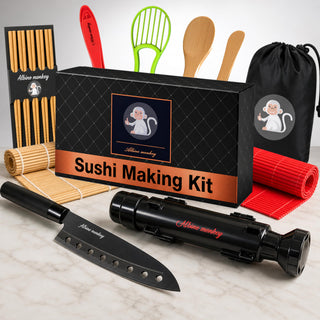
Albino Monkey Sushi Making Kit
$23.994.3★ · 297 ratings on Amazon
20 pieces: bazooka roller, bamboo mat, rice paddle, sashimi knife, 5 pairs of chopsticks and a free 15-lesson video course.
10% off with code SUSHI10

Home / Sushi Recipes / Kimbap

Kimbap Recipe: Korean Seaweed Rice Rolls at Home
Updated November 9, 2026 by the team at Albino-monkey.com
Kimbap (also spelled gimbap) is a Korean seaweed rice roll filled with seasoned vegetables, egg and usually ham, crab stick or fish cake. It looks like a thick sushi roll, but the rice is seasoned with sesame oil and salt instead of vinegar, and the fillings are cooked, so it travels well in a lunch box. This recipe makes 4 large rolls, about 40 pieces.
Ingredients
- 4 cups cooked short-grain rice, warm
- 1 tablespoon toasted sesame oil, plus more for brushing
- 1/2 teaspoon salt
- 4 sheets gim or nori
- 4 strips yellow pickled radish (danmuji)
- 1 bunch spinach (about 8 ounces)
- 1 garlic clove, minced
- 1 large carrot, cut into thin matchsticks
- 3 eggs, beaten with a pinch of salt
- 4 imitation crab sticks, or 4 strips ham or fish cake
- 1 tablespoon neutral oil
- 1 tablespoon toasted sesame seeds
Directions
- Season the warm rice with 1 tablespoon sesame oil and the salt, folding gently with a rice paddle. Cover and let it cool to room temperature.
- Blanch the spinach in boiling water for 30 seconds, rinse under cold water and squeeze dry. Mix it with the garlic, a few drops of sesame oil and a pinch of salt.
- Saute the carrot in a little oil with a pinch of salt for 2 minutes until just soft.
- Cook the beaten eggs in a lightly oiled pan as a thin omelet over low heat, flip once, then cut it into long strips.
- If using ham or fish cake, brown the strips in the pan for 1 to 2 minutes. Pat the pickled radish dry.
- Lay a sheet of gim on a bamboo mat, shiny side down. Spread 1 cup of rice over it in a thin even layer, leaving 1 inch bare at the top edge.
- Line up the radish, spinach, carrot, egg and crab or ham across the middle of the rice in a tight bundle.
- Lift the near edge of the mat over the fillings, tuck it in and roll away from you, pressing firmly through the mat. Press a few grains of rice on the bare edge to seal.
- Brush the outside with sesame oil and sprinkle with sesame seeds. Slice into 10 pieces with a sharp, oiled knife.
Kimbap vs sushi: what is the difference?
| Kimbap | Sushi roll (maki) | |
|---|---|---|
| Origin | Korea | Japan |
| Rice seasoning | Sesame oil and salt | Rice vinegar, sugar and salt |
| Typical fillings | Cooked: spinach, carrot, egg, pickled radish, ham or crab | Often raw fish, plus avocado and cucumber |
| Size | Large, 5 or more fillings | Thin to medium |
| Finish | Brushed with sesame oil, sesame seeds | Served with soy sauce, wasabi, ginger |
| Served | Picnics, lunch boxes, room temperature | Usually fresh, at the table |
Popular kimbap variations
- Tuna mayo kimbap: canned tuna mixed with mayo, plus perilla or lettuce leaves to keep the mayo off the rice.
- Spam kimbap: pan-fried strips of Spam in place of ham.
- Vegetarian kimbap: skip the meat and add pan-fried tofu, burdock root or extra egg.
- Mini kimbap (mayak kimbap): small, thin rolls with just carrot, radish and spinach, served with a mustard soy dip.
Tips so your kimbap does not fall apart
- Keep the rice layer thin. Too much rice is the most common reason a roll will not close.
- Squeeze the spinach really dry and pat the radish dry. Wet fillings make the seaweed soggy and tear.
- Roll firmly and let the roll rest seam side down for a minute before cutting.
- Oil the knife with sesame oil and slice with long, gentle strokes.
Tools that make it easier
A bamboo mat is what gets kimbap tight enough to slice cleanly; a rice paddle helps you spread a thin, even layer. Kimbap fillings are big, so roll with steady pressure through the mat.
We make the Albino Monkey Sushi Making Kit (20 pieces, $23.99 on Amazon, 4.3 stars from 297 ratings): a bamboo mat, a dishwasher-safe mat, a rice paddle and spreader, the bazooka roller, a sashimi knife and 5 pairs of chopsticks, plus a free 15-lesson video course. See what is in the kit or start with our step-by-step sushi guide.
Common questions
- Is kimbap the same as sushi?
- No. Kimbap is Korean and seasons the rice with sesame oil and salt, while sushi rice uses vinegar. Kimbap fillings are usually cooked; sushi often uses raw fish.
- What goes inside kimbap?
- Classic fillings are yellow pickled radish, seasoned spinach, carrot, egg strips and ham, crab stick or fish cake. Tuna mayo and Spam versions are popular too.
- Can I make kimbap with regular nori?
- Yes. Korean gim and Japanese sushi nori both work. Use the shiny side down so the rice goes on the rough side.
- How long does kimbap last?
- It is best the day it is made. Keep it covered and eat it within a few hours, or refrigerate and reheat slices in a little beaten egg, a common Korean trick for leftover kimbap.
- Do I need a bamboo mat for kimbap?
- A mat makes it much easier to roll a big kimbap tightly. You can use a towel covered in plastic wrap, but the roll will be looser.
More sushi to make at home


